Any Parish, Anytime

Louisiana Court Ordered Classes Online

Parish courthouses close at five. Your evening doesn’t. CrediCourses stays open whenever you actually have a free hour, a lunch break, a Sunday afternoon, two in the morning if that’s when your schedule allows it. Pick the subject that matches your case, anger management, parenting, decision-making, or another option, and start right away. Nobody schedules you into a group call. Nobody hands you a timer. You read, you answer, you move forward at your own speed, whether you’re in New Orleans, Shreveport, Baton Rouge, or a small town in a parish most people couldn’t point to on a map. Finish the material, and your certificate downloads immediately.

Starts at:

$19 No Hidden Fees

acceptance Enroll Securely • Start Learning Instantly
Starts at

$19 - No Hidden Fees

Format

100% Online

Created By

Certified Experts

Certificate

Same Day

All 64 Parishes

One Certificate, Every Parish

Three Fast Steps

Getting Your Certificate

Confirm the length your judge, probation officer, or workplace assigned. Set up an account. Work through the lessons at whatever pace fits your week. Download your certificate once you’re actually finished.

01

Choose Your Course

Browse our catalog to find the exact program you need to meet your court mandate, workplace requirement, or personal goal.

02

Enroll Instantly

Create your account and complete our secure checkout in minutes. There are no waiting periods—you get access to your materials right away.

03

Learn at Your Own Pace

Access your class 24/7 from any smartphone, tablet, or computer. Log in and out whenever it naturally fits into your busy schedule.

04

Pass the Assessment

Complete a straightforward final exam or quick knowledge checks to validate what you have learned and ensure you meet all compliance standards.

05

Download Your Certificate

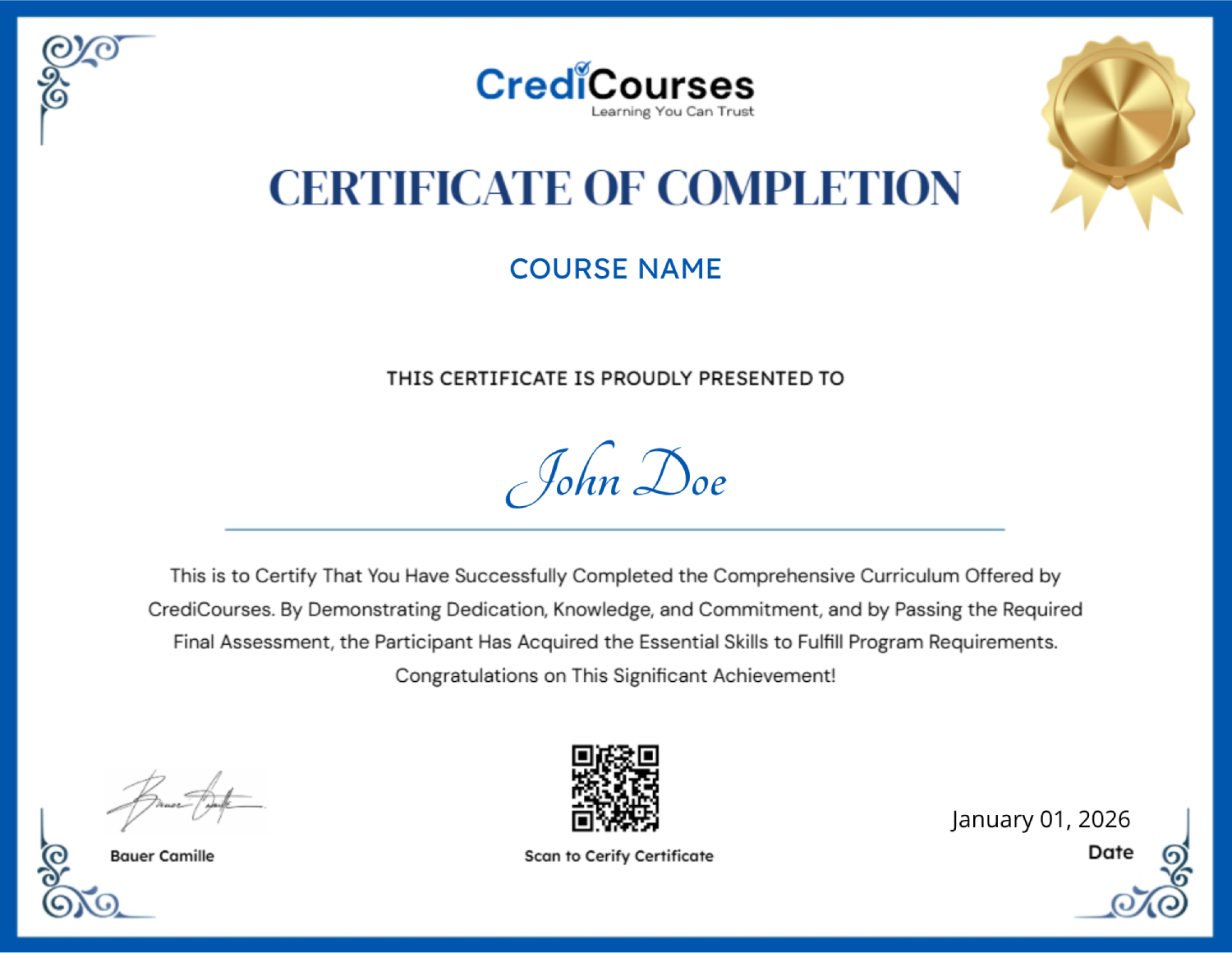
The moment you pass, instantly access, save, and print your official, ready-to-submit proof of completion. No waiting on the mail.

Common Situations

Who Ends Up Enrolling

A sentence came with a class attached. That piece is still open.
Probation is waiting on a certificate before your file moves toward closing.
Custody talks won't finalize without a completed parenting class.
Domestic abuse charges sometimes come with an intervention program requirement.
HR wants anger management documentation after an incident at work.
A DWI diversion program in your parish included substance abuse education as a condition.
Theft charges sometimes carry a class as part of the plea.
Louisiana's child welfare system is involved, and a class fits into that plan.
A school flagged a conduct issue, and a class followed.
No court case at all, just documentation a landlord or employer wants on file.
Command requires it, if you're stationed at a Louisiana military base.
Some people sign up on their own, working on anger before it becomes a bigger issue.
Nothing near you actually offers what your case needs.
Shared custody comes with a parenting class already written into the agreement.
One completed class is what separates a paused case from a closed one.

Weigh It Out

How We Compare

Some Louisiana providers charge more for material covering identical ground. Line up our pricing, our self-paced structure, and our refund policy before you commit to anyone else at all, no matter what your case looks like.

FeatureIn PersonLive ZoomGroup SessionsCrediCourses
24/7 Flexible Accesscrosscrosscrosstick
100% Private & Confidentialcrosscrosscrosstick
Completely Self-Pacedcrosscrosscrosstick
Zero Commute Requiredcrosscrosscrosstick
Zero Social Pressurecrosscrosscrosstick
No Webcam Requiredcrosscrosscrosstick
Works on Any Smartphonecrosscrosscrosstick

24/7 Flexible Access

In Person
Live Zoon
Group Sessions
CrediCourses

100% Private & Confidential

In Person
Live Zoon
Group Sessions
CrediCourses

Completely Self-Paced

In Person
Live Zoon
Group Sessions
CrediCourses

Zero Commute Required

In Person
Live Zoon
Group Sessions
CrediCourses

Zero Social Pressure

In Person
Live Zoon
Group Sessions
CrediCourses

No Webcam Required

In Person
Live Zoon
Group Sessions
CrediCourses

Works on Any Smartphone

In Person
Live Zoon
Group Sessions
CrediCourses

Fixing the Actual Leak

What This Class Is Meant to Do

A leaky faucet keeps dripping no matter how many times you wipe up the puddle. The puddle isn’t the problem. The leak is. This class works on the leak, the actual pattern behind a reaction, a parenting habit, a decision made too fast. Anger management looks at what triggers the outburst, not just the outburst itself. Parenting looks at the habit behind the argument, not just the argument. Decision-making looks at the half-second before a choice gets made. Wipe up the puddle without touching the leak, and the same mess shows up again next week. Fix the actual leak, and the puddle stops forming in the first place.

Nationally Recognized

NAADAC-credentialed. NAMA-credentialed. NPEN-credentialed. Every instructor behind these courses carries names that mean something well past Louisiana's borders, in courtrooms and HR offices across the country. Whoever reviews your certificate has likely encountered these credentials before. That recognition works in your favor every single time. Recognition like that isn't something you can fake.

Easily Accessible

No drive across the Atchafalaya Basin to reach a class in another parish. No parking search near a downtown Baton Rouge courthouse. Whatever device is already in your hand, that's all this needs. A phone at lunch, a laptop after the kids are asleep, wherever you happen to be sitting works exactly the same.

Guaranteed Acceptance

Rejections happen in roughly half a percent of cases, nothing more. Fall into that small group, and a written denial is all it takes. Your full payment returns. No appeal to file. No fine print buried somewhere. Handled quickly, every time it happens. That's the whole process.

Sixty-Four Different Systems

Why We're Upfront About Parish Rules

Louisiana runs 64 parishes, and DWI diversion programs get administered separately in each one, through that parish’s own District Attorney’s office. What flies in Orleans Parish might not fly in a smaller parish two hours away. That’s just the reality. We tell you directly when a subject depends on your specific parish instead of assuming one answer fits everywhere. For anger management, parenting, and decision-making, our instructors carry credentials through NAADAC, NAMA, and NPEN, names that don’t change meaning depending on which parish your paperwork lands in. You get a straight answer, not a guess dressed up as one. That’s worth something.

Parish Differences, Named Directly

When a DWI diversion program varies by parish, we say so instead of pretending one rule covers the whole state.

A Specialist Per Subject

Anger management, parenting, and decision-making are each written by someone who focuses only on that area.

Credentials That Don't Wear Off

NAADAC and NAMA recognition means the same thing whether your case is in Orleans Parish or a much smaller one.

The Same Certificate, Every Parish

Location changes nothing about what you receive or how the course was built.

A Refund Without the Hoops

A denied certificate means money back, handled directly, not buried in a claims process.

Instructors, Not Generalists

This is a team focused specifically on behavioral education, not a broad course catalog stretched thin.

A Reform, Then a Reversal

Why Louisiana Still Leans on Classes

In 2017, Louisiana passed ten reform bills aimed at reducing its prison population, then one of the highest in the world, higher than every country except El Salvador once local jails were counted. The reforms worked. Five-year recidivism dropped from 43.5% to 40.3% within a few years, and the state reinvested over $152 million in savings into reentry programs, community supervision, and education. Then in 2024, the legislature rolled much of that back through a new round of tougher sentencing laws. Politics shifted. The underlying data didn’t. Structured education still reduces repeat offenses, regardless of which direction state policy happens to be leaning that year. A class about anger, parenting, or decision-making works on the actual behavior behind a case, not on whatever the current legislative mood happens to be. The material doesn’t care who’s in charge. It just does what it was built to do.

Plainly Stated

What an Unfinished Class Actually Costs

An unfinished class does not vanish. Probation departments track deadlines. A missed one becomes a note in your file, usually surfacing at your next check-in. That note can turn into a hearing, additional supervision, or in rarer cases, jail time the original sentence was designed to help you avoid. Louisiana’s domestic abuse intervention programs run on a strict minimum, twenty-six sessions across at least twenty-six weeks, and incomplete participation gets reported straight back to the court. Family court works on its own separate timeline. A judge waiting on a parenting class simply won’t finalize custody until it’s done, regardless of how ready either parent is otherwise. An employer who required a class doesn’t need a court’s involvement to treat an unfinished one as a real problem on its own. None of this needs a new charge. It needs one form that was never submitted. Submitting it late still beats letting it sit indefinitely.

A World-Level Number

The Numbers Behind Louisiana's Approach

Louisiana’s incarceration rate, once jail populations awaiting trial are counted, is higher than any country on earth except El Salvador. That includes the United States, which already has one of the highest rates in the world. Louisiana has held the number one or number two spot in the country for years. The state’s own three-year recidivism rate runs between 29.6% and 35.1%, depending on which agency is measuring, and the five-year rate sat at 43.5% before 2017’s reform push brought it down to 40.3%. That drop reflected real investment: over $152 million redirected into reentry programs, community supervision, and vocational education. Louisiana’s domestic abuse intervention programs require a strict minimum of twenty-six in-person sessions across twenty-six weeks, defined directly in state statute. DWI cases route through diversion programs that vary parish by parish, since each District Attorney’s office runs its own version. None of these numbers are abstract. They are the reason a real, structured class carries actual weight here.

Louisiana's incarceration rate, including jail populations awaiting trial, exceeds 1,000 per 100,000 residents, higher than any country except El Salvador.
Louisiana has ranked either first or second nationally in incarceration rate for years, trading places with Oklahoma and Mississippi.
The Louisiana Commission on Law Enforcement reports the state's three-year recidivism rate at 29.6%.
A separate Bureau of Justice Assistance estimate puts Louisiana's recidivism rate at 35.1%.
Louisiana's Department of Public Safety and Corrections reports 30% of released individuals return to prison within three years, and 40% within five.
One study found 44.4% of people released from Louisiana prisons in 2011 had returned by 2016.
Louisiana's five-year recidivism rate stood at 43.5% before the state's 2017 Justice Reinvestment reforms took effect.
That same five-year rate dropped to 40.3% for people released in 2017, after the reforms were in place.
Louisiana's 2017 reform package included ten separate bills aimed at reducing the state's nonviolent prison population.
Those reforms generated more than $152 million in reinvested savings, redirected into reentry, supervision, and education programs.
In 2024, the Louisiana Legislature passed new "tough on crime" laws that rolled back several of the 2017 reforms.
Louisiana operates 111 jails across its 64 parishes, one of the highest concentrations of jails in the country.
Louisiana's prison and jail population combined stood at more than 45,000 people as of the end of fiscal year 2023-2024.
Louisiana law (R.S. 14:35.3) defines a court-monitored domestic abuse intervention program as a minimum of 26 in-person sessions over at least 26 weeks.
A first-offense DWI in Louisiana carries a mandatory 48 hours in jail, with up to two years of probation supervision.
Standard first-offense DWI conditions in Louisiana include roughly 30 hours of education and at least 32 hours of community service.
Louisiana's DWI diversion programs are administered separately by the District Attorney's office in each of the state's 64 parishes.
Louisiana is made up of 64 parishes rather than counties, one of only two states organized this way alongside Alaska's boroughs.

Above the Politics

Why a Class Still Matters Either Way

State policy on crime swings back and forth, reform one year, tougher laws the next. Louisiana has lived through exactly that cycle since 2017. None of it changes what actually helps an individual person avoid a repeat case. A structured class works on the specific behavior behind a situation, whether lawmakers are in a reform mood or not. Anger, poor decisions, an unresolved pattern at home, these don’t wait for the legislature to decide what to do about them. A class exists above that back-and-forth entirely. It is not a policy position. It is a practical response to whatever actually led to your case, built to work the same way regardless of which direction the political wind happens to be blowing that year.

Policy Bends, Behavior Doesn't Wait

Legislative sessions come and go, but the pattern behind a case needs addressing regardless of which laws are currently in effect.

The 2017 Numbers Still Hold

Recidivism genuinely dropped when Louisiana invested in education and reentry, whatever the political mood since then.

A Class Isn't a Position

This isn't about being tough or soft on crime. It's about giving one person real tools for their specific situation.

Individual Results, Not State Trends

Whether Louisiana's incarceration rate rises or falls statewide, your own outcome still depends on what you actually do with this material.

Trusted by Courts, Employers, and Learners Nationwide

Education you can rely on. Privacy you can count on.

This is a title

Frequently Asked Questions

Have questions about enrollment, course access, or your certificate? Browse our most common inquiries below to find everything you need to know before getting started.

Q. Will a Louisiana court accept a CrediCourses certificate?
A. Yes, for subjects like anger management, parenting, decision-making, and general behavioral classes. Our instructors are trained through NAADAC and match what most Louisiana courts expect from an approved class.
Q. Does this cover Louisiana's DWI diversion education requirement?
A. Check with your parish District Attorney's office first. DWI diversion programs are administered separately by parish, so requirements can vary depending on where your case is filed.
Q. Does this satisfy Louisiana's domestic abuse intervention program requirement?
A. No. Louisiana law requires that program to run at least 26 in-person sessions over 26 weeks. Confirm your requirement with the court before assuming this class applies.
Q. Do I need to attend a live class?
A. No. Everything happens online, at your own pace, with nothing to log into at a set time.
Q. How long does my course need to be?
A. That depends on what your judge, probation officer, or employer told you. The material stays the same, only the length changes.
Q. What if my certificate is not accepted?
A. That's rare, under 0.50% of cases. Send us the written denial, and we'll refund your payment in full.
Q. Does my parish matter for enrollment?
A. No, for the subjects we offer. Our courses work the same across all 64 Louisiana parishes, big or small.
Q. When will my certificate be ready?
A. Right after you finish the last lesson, ready to send to your court, probation officer, or employer.
Q. Is there a deadline once I begin?
A. No. Move through the material at whatever pace fits your schedule.
Q. Who actually builds the course material?
A. Instructors trained through NAADAC, the National Anger Management Association, and the National Parenting Education Network.
Q. Will my employer accept this for a workplace issue?
A. Most Louisiana employers do, since our training matches standards they already recognize.
Q. Do you offer classes for custody situations?
A. Yes, including parenting and co-parenting classes commonly required in Louisiana family court.
Q. Does pricing change depending on my parish?
A. No. The price stays the same everywhere in Louisiana, no matter where your case is filed.
Q. Can someone confirm that I finished the class?
A. Yes. Your certificate includes details your probation officer or the court can check directly.
Q. What if I cannot find the exact course length I need?
A. Reach out to our support team, and we'll help match you to the right one.