Works Anywhere You Are

Washington Court-Ordered Classes Online

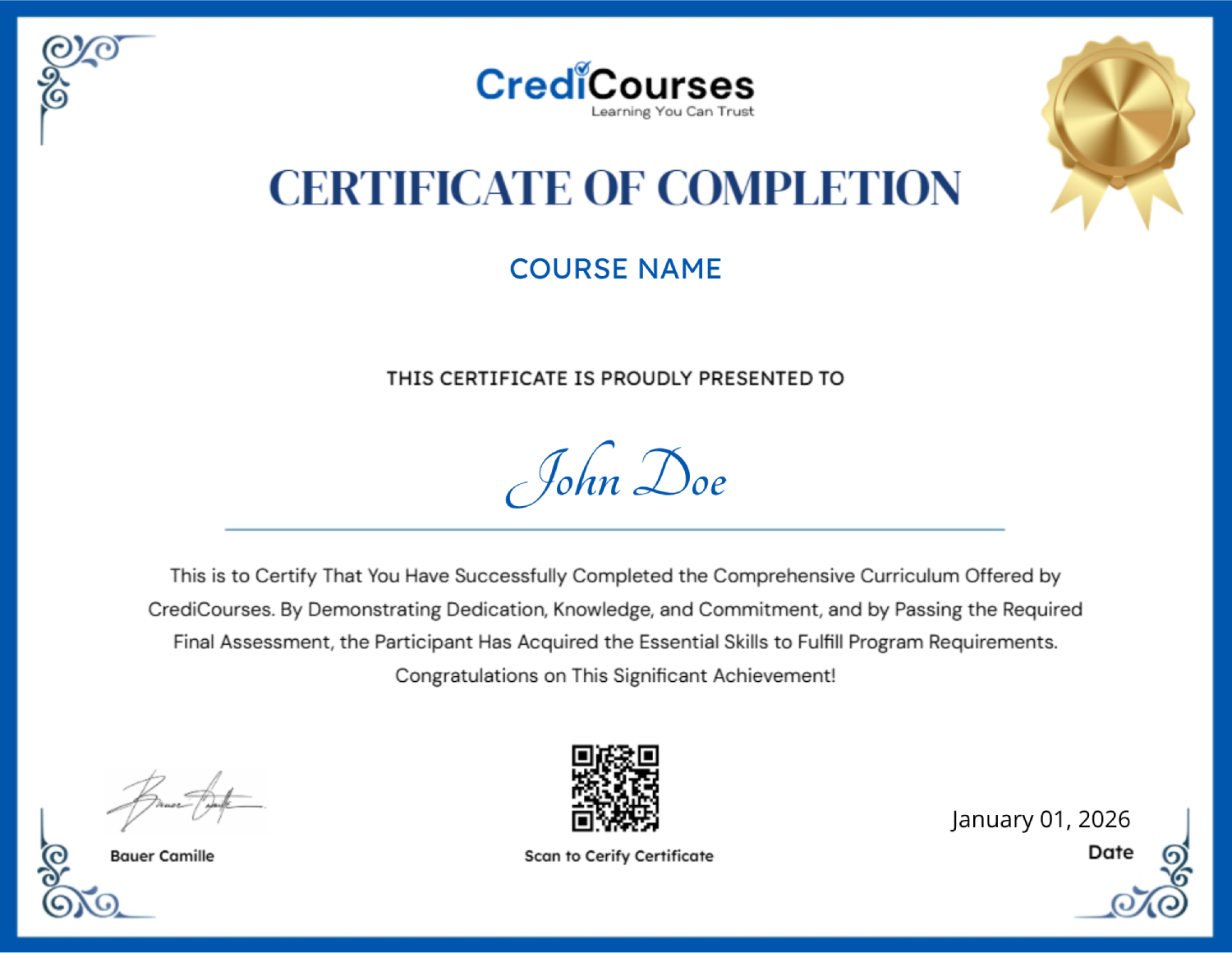
West of the mountains, life moves one way. East of them, it moves another. Court requirements don’t care which side you’re on. CrediCourses offers online, court-approved classes covering Anger Management, Alcohol & Drug Awareness, DUI/DWI, Parenting, Theft, Decision Making, Domestic Violence Education, and other requirements Washington courts hand down statewide. Skip the ferry schedules, the traffic on I-5, and the class night that never lines up with your shift. Everything runs on your phone or laptop, on your own time, wherever you happen to be. Finish the material, and you’ll have a Certificate of Completion your court, probation officer, or employer can confirm without a call.

Starts at:

$19 No Hidden Fees

acceptance Enroll Securely • Start Learning Instantly
Starts at

$19 - No Hidden Fees

Format

100% Online

Created By

Certified Experts

Certificate

Same Day

From Puget Sound to the High Desert

Washington Counties Where CrediCourses Is Accepted

Washington is really two different states stitched together by the Cascades — wet
urban Puget Sound on one side
dry high desert on the other. CrediCourses certificates are accepted across both halves
including King
Pierce
Snohomish
Spokane
Clark
Thurston
Kitsap
Whatcom
Yakima
and Benton County. Whether your case is filed in a Seattle courtroom or a smaller district out past the mountains
the class works the same way and the certificate holds up the same way.

Quick to Get Going

How Enrollment Works

Sign up online, work through the lessons whenever your day allows, and download your certificate the moment you’re finished. No appointments. No forms to mail in.

01

Choose Your Course

Browse our catalog to find the exact program you need to meet your court mandate, workplace requirement, or personal goal.

02

Enroll Instantly

Create your account and complete our secure checkout in minutes. There are no waiting periods—you get access to your materials right away.

03

Learn at Your Own Pace

Access your class 24/7 from any smartphone, tablet, or computer. Log in and out whenever it naturally fits into your busy schedule.

04

Pass the Assessment

Complete a straightforward final exam or quick knowledge checks to validate what you have learned and ensure you meet all compliance standards.

05

Download Your Certificate

The moment you pass, instantly access, save, and print your official, ready-to-submit proof of completion. No waiting on the mail.

Who Actually Signs Up

Reasons Washingtonians Pick an Online Class

A Washington court attached this class to your sentence, probation, or a diversion agreement.
Having enrollment proof ready in advance tends to make a probation check-in shorter.
Tech and warehouse shift work around Seattle rarely lines up with a class that meets the same night every week.
Ferry schedules and I-5 traffic already eat the hours a weekly class across town would need.
A custody case can hinge on whether a required parenting class actually got finished.
DCYF sometimes builds a class directly into a family's case plan.
A first DUI here usually means alcohol education standing between you and your license back.
Some employers ask for a certificate after a workplace incident, with no court involved at all.
Theft and shoplifting charges in Washington often carry an education requirement of their own.
Joint Base Lewis-McChord personnel and reservists deal with schedules that shift without much warning.
Getting the certificate finished weeks ahead of a hearing beats scrambling the week of.
An attorney recommended handling the requirement early, ahead of sentencing.
Students at UW, WSU, or another in-state school manage a legal requirement without losing a semester.
Moving from one Washington county to another mid-case shouldn't mean restarting the class.
Caring for a parent or a child rules out a fixed weekly class time for a lot of people.

Compare Before Committing

How CrediCourses Stacks Up

Not every provider is worth your time or money. See how CrediCourses compares to typical Washington course options on price, curriculum, court acceptance, and turnaround.

FeatureIn PersonLive ZoomGroup SessionsCrediCourses
24/7 Flexible Accesscrosscrosscrosstick
100% Private & Confidentialcrosscrosscrosstick
Completely Self-Pacedcrosscrosscrosstick
Zero Commute Requiredcrosscrosscrosstick
Zero Social Pressurecrosscrosscrosstick
No Webcam Requiredcrosscrosscrosstick
Works on Any Smartphonecrosscrosscrosstick

24/7 Flexible Access

In Person
Live Zoon
Group Sessions
CrediCourses

100% Private & Confidential

In Person
Live Zoon
Group Sessions
CrediCourses

Completely Self-Paced

In Person
Live Zoon
Group Sessions
CrediCourses

Zero Commute Required

In Person
Live Zoon
Group Sessions
CrediCourses

Zero Social Pressure

In Person
Live Zoon
Group Sessions
CrediCourses

No Webcam Required

In Person
Live Zoon
Group Sessions
CrediCourses

Works on Any Smartphone

In Person
Live Zoon
Group Sessions
CrediCourses

More Than a Checkbox

What Actually Changes When You Finish

Most people go into a court-ordered class expecting to just get it over with. That’s understandable, but it leaves something on the table. CrediCourses is built around a different outcome — actually understanding what led to the charge, not just clicking through slides until the progress bar hits 100 percent. Washingtonians who engage with the material tend to leave with a clearer sense of their own patterns and a real plan for the next difficult moment, not just a document to hand a probation officer. The certificate satisfies the court. What you take from the course is what actually sticks with you afterward.

Nationally Recognized

Every state handles court-ordered education a little differently, but the standard CrediCourses builds to doesn't change from one to the next. Credentialed professionals wrote the curriculum, and it gets revised as expectations shift. That consistency is why the certificate holds up whether your case is in Washington or somewhere else entirely.

Easily Accessible

Between ferry schedules, mountain passes, and traffic that piles up around Seattle at almost any hour, finding a fixed weekly class night in Washington can be its own hassle. CrediCourses skips that problem completely. Log in from a laptop at home or a phone on a break, and keep moving whenever you actually have time. Your location stops being the obstacle.

Guaranteed Acceptance

Certificates flagged by a Washington court are rare enough that we can walk you through nearly every past instance from memory. If yours becomes one, send us the written denial letter from your court or probation officer, and we'll refund your payment in full, the same day, no conditions. We stand behind that promise because we stand behind the material.

Beyond the Word "Certified"

What Actually Backs Up the CrediCourses Name

Plenty of companies use the word “certified.” Fewer can back it up when someone actually asks. CrediCourses can. Our instructors hold credentials through real organizations, verifiable on request, not just printed on a webpage. Our curriculum was written by one consistent team, not stitched together from outside contractors on a deadline. Pricing has stayed close to where it started, because charging more to someone already dealing with a legal requirement never felt right to us. Washington courts scrutinize alcohol and domestic violence education closely, and we built our material to hold up to that kind of attention rather than hope nobody checks.

Credentials that hold up to scrutiny

NAADAC, NAMA, and NPEN certifications back our instructors — verifiable, not just listed.

Built in-house, not farmed out

One team wrote every course, so quality doesn't dip depending on which module you're in.

A refund with no extra hoops

One denial letter is all it takes. We don't ask for anything more before processing it.

A price that's stayed put

Costs haven't quietly crept upward the way they do with some competitors.

Material that gets revisited, not shelved

Course content is checked and updated instead of sitting untouched for years.

A name Washington courts have seen before

CrediCourses certificates have moved through the state's courts for years without a documented issue.

What the Requirement Actually Covers

Court-Ordered Classes in Washington, Explained

A court-ordered class is education a judge assigns as part of a sentence, a probation condition, or a diversion agreement — not a punishment tacked on for its own sake. In Washington, this most often follows a DUI, a domestic violence charge, or theft, situations where the state has decided structured education adds something a fine alone doesn’t. That reasoning holds real weight here. Alcohol has been tied to well over half of Washington’s impaired-driving fatalities in recent years, and the state runs a formal Domestic Violence Fatality Review process specifically to study and prevent DV-related deaths county by county. CrediCourses built its curriculum around what Washington judges, probation officers, and employers actually expect from a finished course. Completing it isn’t treated as a formality here. It’s read as a genuine sign that you engaged with the requirement, and that can matter when your case comes up for review or sentencing.

The Risk of Putting It Off

What Happens If the Class Never Gets Done

An unfinished court-ordered class in Washington doesn’t quietly disappear. A judge can issue a warrant, revoke probation, or extend a sentence over a missed requirement. An employer who required a certificate as a condition of returning to work can move forward without you. A custody matter can turn unfavorable if a required parenting class never gets completed. Even a routine step, like reinstating a license after a DUI, usually stalls until the class is done. None of this is set in stone forever — most situations can still be resolved once the requirement is met, even behind schedule. But every week it sits unfinished tends to add cost, whether that’s more fines, extended probation, or a court that’s grown less patient with the delay. Finishing it late is still a far better outcome than letting it disappear from the list entirely.

Washington's Numbers, Straight Up

Why This Requirement Gets Taken Seriously

Washington’s impaired driving and domestic violence figures explain a lot about why courts treat class requirements as more than a formality. Alcohol has been involved in well over half of the state’s impaired-driving fatalities in recent years, and Washington runs one of the more established Domestic Violence Fatality Review systems in the country, tracking deaths by county twice a year. The numbers below come from the Washington Traffic Safety Commission, the state’s domestic violence coalition, and published research on intervention programs. They explain something straightforward: judges here aren’t attaching education requirements to sentences out of habit. They’re doing it because the data keeps showing that a completed class shifts outcomes in ways a fine or a short jail stay generally doesn’t on its own, and that’s exactly why a finished certificate carries weight once it reaches a judge’s desk.

Between 2017 and 2021, alcohol was involved in 57 percent of Washington's impaired-driving fatalities.
Drug impairment, separate from alcohol, accounted for 43 percent of Washington's impaired-driving fatalities during that same period.
An estimated 69,440 crashes in a recent reporting year in Washington involved alcohol, killing 331 people and injuring roughly 25,700 more.
Crashes involving a BAC of 0.10 or higher accounted for an estimated 286 of those Washington deaths.
Alcohol-related traffic fatalities in Washington have fallen 36 percent since 1982, and 83 percent among drivers under 21.
Between 2003 and 2012, 1,921 people died in alcohol-related crashes in Washington.
Washington recorded 161 drunk driving fatalities in 2016, including 14 involving people under the age of 21.
Washington residents aged 21 to 34 represent the largest DUI victim group, at 4 deaths per 100,000 in that age range.
Men in Washington die in alcohol-related crashes at more than three times the rate of women — 5.2 versus 1.5 per 100,000.
A statewide, mandatory server-training program is estimated to reduce nighttime DUI injury crashes in Washington by 17 percent.
Nationally, alcohol-impaired driving accounted for 32 percent of all traffic fatalities in 2023.
In a Washington study covering 2015 through 2020, 12.9 percent of all violent deaths statewide were connected to domestic violence.
Washington recorded 32 domestic violence-related homicides in 2018 alone.
Washington publishes domestic violence fatality data broken down by county, updated twice a year.
Everett, Washington saw domestic violence case dismissal rates drop by more than 50 percent after adopting no-drop prosecution policies.
Washington has 63 domestic violence support programs operating across 36 cities statewide.
Washington law requires the state to certify and set standards for agencies that provide intervention services to domestic violence perpetrators.
Washington's Domestic Violence Fatality Review Panels were created by state law specifically to study and help prevent future DV-related deaths.
Nationally, one alcohol-impaired driving fatality occurs roughly every 39 to 42 minutes, depending on the reporting year.
Nationally, completed batterer intervention programs are linked to a 33 percent reduction in domestic violence recidivism.

Correction, Not Piling On

Why Washington Judges Attach These Classes

A judge in Washington isn’t ordering a class to make a sentence heavier than it needs to be. The reasoning runs the opposite direction — education has shown a stronger track record than jail time alone at preventing the next incident. A class creates an actual pause, a chance to look honestly at what happened instead of moving straight from courtroom back into daily routine with nothing addressed. Courts across the state treat this as rehabilitation, and that framing carries into how the requirement gets viewed later, whether at sentencing, a probation review, or a request to close a case out early.

Fewer second offenses

Washington's own data links completed education to a real drop in repeat DUI and domestic violence cases.

Judges factor it in

A finished class often shapes how a court handles probation terms or sentencing decisions.

Targets the actual behavior

The class addresses what led to the charge, not just the charge sitting on paper.

A real marker of effort

Courts increasingly treat a completed class as genuine follow-through, not just a formality.

Trusted by Courts, Employers, and Learners Nationwide

Education you can rely on. Privacy you can count on.

This is a title

Frequently Asked Questions

Have questions about enrollment, course access, or your certificate? Browse our most common inquiries below to find everything you need to know before getting started.

Q. Will a Washington court accept this certificate?
A. In nearly all cases, yes, across court, probation, and employer requirements. The one exception is Washington's certified in-person domestic violence intervention program — that specific requirement has its own state approval process, so confirm with your court if it applies to your case.
Q. Do I have to log in at a set time?
A. No. There's no live session to attend. You move through the lessons whenever your schedule actually allows it.
Q. How long does the Washington course take?
A. That depends on the hours your court, probation officer, or employer requires. The lessons themselves stay identical across every duration — only the assessment length changes.
Q. What if a court doesn't accept my certificate?
A. It's uncommon, but if it happens, send us the written denial and we'll refund you in full, without complications.
Q. Can I complete this using just my phone?
A. Yes. It's built to work equally well on phones, tablets, and laptops.
Q. How quickly will I have my certificate?
A. Immediately after finishing the last lesson. It's ready to download right away.
Q. Are your instructors actually certified?
A. Yes. Our instructional team holds credentials through NAADAC, the National Anger Management Association, and the National Parenting Education Network.
Q. Will this cost less than an in-person option?
A. Usually, yes. Keeping prices reasonable is a deliberate choice, not a limited-time deal.
Q. Can I pause partway through and come back later?
A. Yes. Progress saves automatically, so stopping doesn't cost you anything you've already completed.
Q. Can you notify my probation officer that I've enrolled?
A. Yes. We can provide documentation you're free to forward directly to your probation officer or the court.
Q. What courses are available to Washington residents?
A. Anger Management, Alcohol & Drug Awareness, DUI/DWI Education, Parenting, Theft, Decision Making, Domestic Violence Education, and other court-related programs.
Q. Does anyone else see that I've enrolled?
A. No. Your enrollment stays private and is only shared with whoever you specifically authorize.
Q. What if I won't finish before my court date?
A. Reach out right away. Washington courts don't take missed deadlines lightly, and getting ahead of it early gives you the best shot at a workable outcome.
Q. Does a shorter course leave out material?
A. No. Every version covers the same core curriculum. Only the assessment length shifts based on your required hours.
Q. How do I know which course fits my situation?
A. Check your court order or probation paperwork, or ask your attorney which class and hour count applies to your case.