No Flight Required

Alaska Court Ordered Classes Online

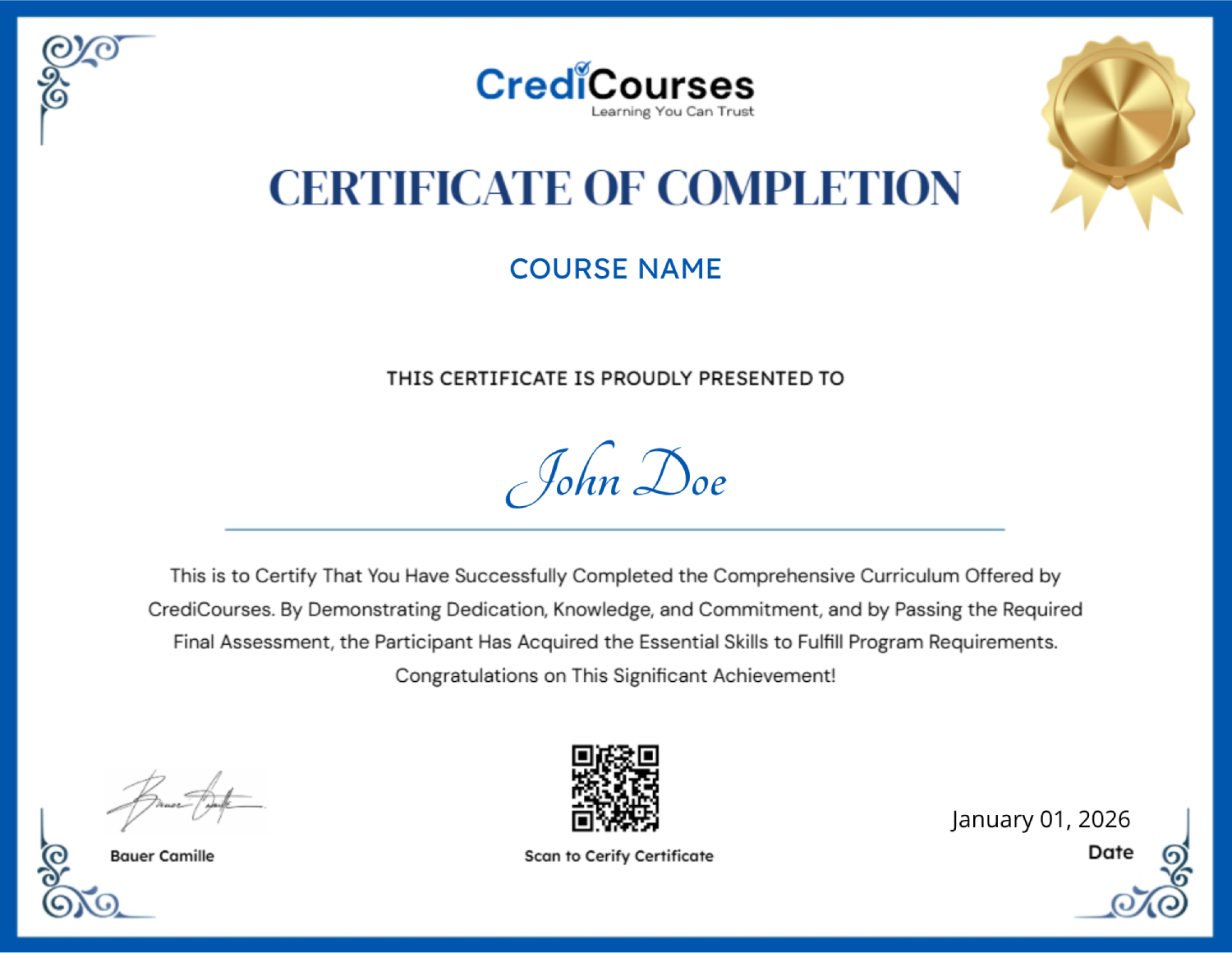
In a state where some residents fly, ferry, or drive hours just to reach the nearest courthouse, requiring a physical classroom on top of that isn’t just inconvenient, it’s often unrealistic. CrediCourses removes the distance entirely: the whole class lives online, with no live video check-ins, no travel to Anchorage or Fairbanks, and no clock counting down while you work. Log on from Juneau, Bethel, Utqiaġvik, or anywhere your internet connection reaches, whenever your schedule actually allows it. Finish the material and your Certificate of Completion is ready to send to your court, probation officer, or ASAP caseworker the same day.

Starts at:

$19 No Hidden Fees

acceptance Enroll Securely • Start Learning Instantly
Starts at

$19 - No Hidden Fees

Format

100% Online

Created By

Certified Experts

Certificate

Same Day

Every District Covered

Valid in Every Judicial District

Aleutians East Borough
Aleutians West Census Area
Anchorage Municipality
Bethel Census Area
Bristol Bay Borough
Denali Borough
Dillingham Census Area
Fairbanks North Star Borough
Haines Borough
Juneau City and Borough
Kenai Peninsula Borough
Ketchikan Gateway Borough
Kodiak Island Borough
Kusilvak Census Area
Lake and Peninsula Borough
Matanuska-Susitna Borough
Nome Census Area
North Slope Borough
Northwest Arctic Borough
Petersburg Borough
Prince of Wales-Hyder Census Area
Sitka City and Borough
Skagway Municipality
Southeast Fairbanks Census Area
Valdez-Cordova Census Area
Wade Hampton Census Area
Wrangell City and Borough
Yakutat City and Borough
Yukon-Koyukuk Census Area

No Logistics Needed

What Happens After Sign-Up

Confirm the course length your judge or ASAP caseworker assigned, set up your account, work through the lessons from wherever you’re located, and download your certificate once it’s complete.

01

Choose Your Course

Browse our catalog to find the exact program you need to meet your court mandate, workplace requirement, or personal goal.

02

Enroll Instantly

Create your account and complete our secure checkout in minutes. There are no waiting periods—you get access to your materials right away.

03

Learn at Your Own Pace

Access your class 24/7 from any smartphone, tablet, or computer. Log in and out whenever it naturally fits into your busy schedule.

04

Pass the Assessment

Complete a straightforward final exam or quick knowledge checks to validate what you have learned and ensure you meet all compliance standards.

05

Download Your Certificate

The moment you pass, instantly access, save, and print your official, ready-to-submit proof of completion. No waiting on the mail.

Anchorage to the Bush

Who Enrolls in Alaska

A judge in your judicial district ordered a class as part of your sentence or plea deal.
Your Alaska ASAP caseworker needs proof of completion before your case can close.
Custody in your Alaska divorce case is contingent on completing a batterer intervention or parenting program under AS 25.24.150.
License reinstatement after a DUI in Alaska depends on finishing your assigned alcohol education level.
You were named in a protective order that specifically requires a batterer's intervention class under Alaska Statute 18.66.
Your employer flagged a workplace conduct issue and asked for anger management documentation.
A pretrial diversion agreement in your case included an approved class as one of its terms.
There's a theft charge on your record that came with a class requirement attached to the plea.
The Office of Children's Services is involved in your family's case, and a parenting class is part of moving toward reunification.
A university or vocational program in Alaska referred you after a student conduct issue.
Maybe none of this involves a court at all, and you simply need documentation for an employer, landlord, or licensing board.
You're stationed at JBER or another Alaska military installation and your command requires a specific program.
You want to work on decision-making or anger triggers before a situation becomes a legal one.
Your case is being handled in a rural district, and getting to an in-person class isn't realistic.
You're a co-parent working through a required communication or parenting course tied to your custody arrangement.

What You're Paying For

CrediCourses vs. Alaska Options

Some Alaska providers charge premium rates simply because remote access is limited, so compare our flat pricing, self-paced structure, and completion guarantee before committing to anyone.

FeatureIn PersonLive ZoomGroup SessionsCrediCourses
24/7 Flexible Accesscrosscrosscrosstick
100% Private & Confidentialcrosscrosscrosstick
Completely Self-Pacedcrosscrosscrosstick
Zero Commute Requiredcrosscrosscrosstick
Zero Social Pressurecrosscrosscrosstick
No Webcam Requiredcrosscrosscrosstick
Works on Any Smartphonecrosscrosscrosstick

24/7 Flexible Access

In Person
Live Zoon
Group Sessions
CrediCourses

100% Private & Confidential

In Person
Live Zoon
Group Sessions
CrediCourses

Completely Self-Paced

In Person
Live Zoon
Group Sessions
CrediCourses

Zero Commute Required

In Person
Live Zoon
Group Sessions
CrediCourses

Zero Social Pressure

In Person
Live Zoon
Group Sessions
CrediCourses

No Webcam Required

In Person
Live Zoon
Group Sessions
CrediCourses

Works on Any Smartphone

In Person
Live Zoon
Group Sessions
CrediCourses

One Thing You Finish

What Changes After You Finish

Alaska winters teach a certain kind of patience: you learn to get through the dark stretch by focusing on what’s directly in front of you instead of the whole season at once. The same logic applies here. Work through one lesson, then the next, on recognizing triggers, managing conflict, and making steadier calls under pressure, and the requirement stops feeling like an open-ended sentence. What’s waiting on the other side isn’t just a certificate, it’s a custody hearing that can actually move forward, a license that gets reinstated, or a case file that finally closes instead of sitting there unresolved.

Nationally Recognized

Every course we build comes from professionals credentialed through NAADAC, the National Anger Management Association, and the National Parenting Education Network, checked against national standards before it's published. Whether your paperwork lands with an ASAP caseworker in Fairbanks or a judge in a smaller judicial district, the credentials behind your certificate aren't unfamiliar.

Easily Accessible

For a lot of Alaska, "in-person class" means a plane ticket, a ferry schedule, or a long drive on a road that might not be plowed yet. None of that applies here. Whatever device you already have gets you into the coursework, whether you're in downtown Anchorage or a village accessible only by air.

Guaranteed Acceptance

Certificates we issue get accepted close to universally, and the exceptions sit around 0.50% of cases. If yours somehow falls into that small group, a written denial from the court or agency is all it takes for a full refund, no drawn-out claims process required.

Already in Alaska's Files

Why Alaska Refers People Here

Alaska runs its court system through four judicial districts instead of counties, covering a state twice the size of Texas with courthouses concentrated mostly in Anchorage, Fairbanks, and Juneau. A provider serving that geography reliably has to hold up whether the paperwork is headed to a busy Anchorage courtroom or a rural ASAP office hundreds of miles away. CrediCourses curriculum reflects the same cognitive-behavioral standards behind Alaska’s batterer intervention and DUI education requirements. Our instructors carry credentials through NAADAC, NAMA, and NPEN, so whoever reviews your certificate isn’t seeing an unfamiliar name for the first time.

Distance Doesn't Change the Standard

Alaska's geography means services concentrate in a handful of cities, but our curriculum and credentials stay identical whether you're in Anchorage or an off-road community.

Built to Match ASAP Expectations

The Alcohol Safety Action Program relies on structured, accountable education, and our course design follows that same evaluative logic from intake through completion.

Statutory Alignment on Family Cases

Alaska Statute 25.24.150 ties custody outcomes to completed batterer intervention and parenting programs, and our curriculum reflects that same accountability-first structure.

HRCI-Approved for Workplace Use

Alaska employers dealing with internal conduct issues can rely on our HRCI-approved documentation just as they would in-person corporate training.

Recognized Across All Four Districts

First, Second, Third, or Fourth Judicial District, our certificate format matches what Alaska's court system already processes routinely.

One Standard, Not a Regional One

Coastal community or interior village, the same course, the same instructors, and the same refund guarantee apply without exception.

A Problem Alaska Solved

Why These Classes Exist

Alaska’s court system had to solve a problem most states don’t face: how do you enforce a class requirement when the nearest provider might be a bush plane away? The answer became programs like the Alcohol Safety Action Program, built specifically to screen, refer, and track education requirements across a state where in-person options are often limited to Anchorage, Fairbanks, or Juneau. The same logic extends to family and domestic violence cases, where Alaska Statute 25.24.150 ties custody outcomes directly to completing a batterer intervention or parenting program. None of this exists to make your case harder, it exists because the alternative, no education requirement at all, left judges with nothing but a sentence and no way to address what led to it. Whatever subject applies to your case, substance use, parenting, anger, or family violence, the point is the same: give you real tools, not just a formality to get past.

More Than Your File

Who Notices If You Don't Finish

An unfinished class in Alaska doesn’t just sit quietly on your own file, it moves through several other people’s hands first. Your ASAP caseworker reports it up the chain, which becomes the reason a judge schedules a compliance hearing instead of closing your case. If custody is involved, the other parent’s attorney gets to point out, accurately, that the batterer intervention requirement under AS 25.24.150 was never completed, which can freeze visitation exactly where it stands. An employer who required the class independently doesn’t need a court’s permission to treat the gap as its own issue. None of these people are trying to make an example of you, they’re simply following requirements that assume the class gets finished. Closing that one open item, even after the original deadline, tends to matter more to how your case moves forward than almost anything else on the file.

The Numbers Behind It

Why Courts Look Beyond Jail

Alaska carries the highest documented recidivism rate of any state in the country, and that number alone explains a lot about why judges lean on education and treatment requirements instead of relying purely on jail time. The state’s own reporting shows a majority of released offenders return to custody within three years, with a striking share coming back within just the first few months. Substance use disorder rates in Alaska run well above the national average, and untreated addiction remains one of the strongest predictors of a return to the system. Reentry infrastructure, treatment access, transitional housing, stays concentrated in Anchorage, Fairbanks, and Juneau, leaving rural and remote communities with far fewer resources to break the cycle. Structured, portable education like a court-ordered class becomes one of the few requirements that works the same whether you’re released into a city or a village three hours from the nearest treatment center.

Alaska's three-year recidivism rate has been reported at roughly 61.6% to 62%, the highest of any U.S. state by a wide margin.
State data shows nearly two-thirds of released individuals return to custody within just six months of release, according to Alaska Department of Corrections reporting.
Alaska's recidivism rate barely moved over a full decade, from around 66% in 2008 to roughly 62% in more recent reporting.
At 62%, Alaska's recidivism rate sits about ten percentage points above the next-highest state, according to comparative state corrections data.
Alaska incarcerates residents at the second-highest rate per capita in the country, at roughly 626 per 100,000 people.
Alaska's own recidivism definition is broader than most states, counting misdemeanors and probation or parole violations, not just new felony convictions.
The Alaska Mental Health Trust Authority has documented that Alaska Native individuals are significantly overrepresented in the state's correctional system, linking the disparity to historical trauma and limited access to culturally responsive treatment in rural areas.
There were more than 3,900 DUI arrests in Alaska in a single recent reporting year, with a conviction rate near 90%.
Alaska's court-based ignition interlock program is mandatory for nearly all convicted DUI offenders as a condition of both probation and relicensing.
Stakeholders estimate that fewer than 25% of eligible Alaska DUI offenders actually participate in the state's interlock program, despite the legal requirement.
A first-time DUI conviction in Alaska carries a mandatory minimum 72-hour jail sentence, among the strictest first-offense minimums in the country.
Alaska's DUI education program is split into a 12-hour Level 1 course and a 24-hour Level 2 course, depending on offense history and risk level.
The Alaska Alcohol Safety Action Program (ASAP) is legally required for nearly every DUI, OUI, or test-refusal case in the state.
Alaska operates Therapeutic Courts, including specialized DUI courts, that supervise participants intensively for 12 to 24 months as an alternative to standard sentencing.
Under Alaska Statute 25.24.150(g)-(j), a parent with a qualifying domestic violence history starts custody proceedings with a legal presumption against custody or unsupervised visitation.
That same statute allows the presumption to be addressed only if the parent completes a batterer intervention program and, where available, a parenting education program.
Alaska's reentry services, including treatment and transitional housing, remain heavily concentrated in Anchorage, Fairbanks, and Juneau, according to state reentry coalition reporting.
Alaska spans an area more than twice the size of Texas, a geographic reality state agencies cite directly as a barrier to building consistent statewide reentry and treatment infrastructure.

Not Extra Punishment

Why Judges Assign Classes

Why would a judge bother assigning a class when jail time or a fine is simpler to hand down? Because Alaska’s own numbers make the case for it better than any policy argument could. With recidivism rates the highest in the country, judges and the ASAP system alike have leaned toward structured, accountability-based education specifically because punishment alone hasn’t moved the needle. A class requirement isn’t there to make your case more complicated, it’s there to interrupt whatever pattern led to it in the first place, whether that’s substance use, anger, or conflict at home, before it turns into a second arrest or a longer sentence next time.

Because Jail Time Alone Hasn't Worked

Alaska's own recidivism numbers are part of why judges pair sentencing with education instead of relying on incarceration by itself

A Requirement Every Judge Can Apply the Same Way

Standardized coursework gives courts a consistent tool across districts instead of improvising case by case.

Skill-Building, Not Public Shaming

These programs exist to build accountability and better decision-making, not to humiliate anyone going through the process.

Fewer Second Chances Needed

The underlying goal is stopping a repeat offense before it happens, protecting your case, your family, and your record going forward.

Trusted by Courts, Employers, and Learners Nationwide

Education you can rely on. Privacy you can count on.

This is a title

Frequently Asked Questions

Have questions about enrollment, course access, or your certificate? Browse our most common inquiries below to find everything you need to know before getting started.

Q. Does the Alaska court system actually accept CrediCourses certificates?
A. Yes. Our courses are developed by NAADAC-affiliated professionals and built to match what Alaska judges, ASAP caseworkers, and attorneys expect from an approved provider.
Q. Do I have to join a live class at a set time?
A. No. Everything is self-paced and online, no scheduled video sessions, no dial-in requirements, nothing you need to log into at a specific hour.
Q. My case is in a rural part of Alaska, does that limit my options?
A. Not at all. Our courses work anywhere your internet connection reaches, whether that's Anchorage or a village with no road access.
Q. How long is my required course?
A. That's set by your judge, ASAP caseworker, or attorney. The core material stays the same, only the assessment length changes to match your assigned hours.
Q. What if my certificate isn't accepted?
A. That's rare, under 0.50% of cases. If it happens, send us the written denial and we'll issue a full refund.
Q. Is this recognized the same way in every Alaska judicial district?
A. Yes. Whether your case is in the First, Second, Third, or Fourth Judicial District, the same course and certificate apply.
Q. When do I get my Certificate of Completion?
A. Right after you finish the coursework, ready to send to your court, ASAP caseworker, employer, or attorney.
Q. Is there a deadline I have to hit once I start?
A. No built-in countdown. Log in whenever it works for you and move through the lessons at your own pace.
Q. Who's actually responsible for the course content?
A. Instructors credentialed through NAADAC, the National Anger Management Association, the National Parenting Education Network, and HRCI-approved standards built every course we offer.
Q. Will an Alaska employer accept this for a workplace issue?
A. Most employers and HR departments in Alaska accept our certificates for workplace-related conduct or anger management requirements, since our credentials meet recognized national standards.
Q. Do you have courses for Alaska custody cases involving a domestic violence history?
A. Yes. We offer coursework that aligns with what's typically required alongside a batterer intervention program under Alaska's custody statute.
Q. Does pricing change based on where in Alaska I live?
A. No. Pricing stays the same no matter which district or community you're in, because your location shouldn't affect the cost.
Q. Can my ASAP caseworker or probation officer confirm I finished?
A. Yes. Your certificate includes verification details they can check directly if they need to confirm completion.
Q. What if my exact required course length isn't listed?
A. Reach out to our support team, and we'll help match you to the specific duration your Alaska order requires.
Q. How private is my information once I enroll?
A. Fully private. Your enrollment and coursework stay confidential, visible only to you and whoever you choose to share your certificate with.